
A Scifi Crawler Idea
Also available on Patreon. Join the discussion and follow me there
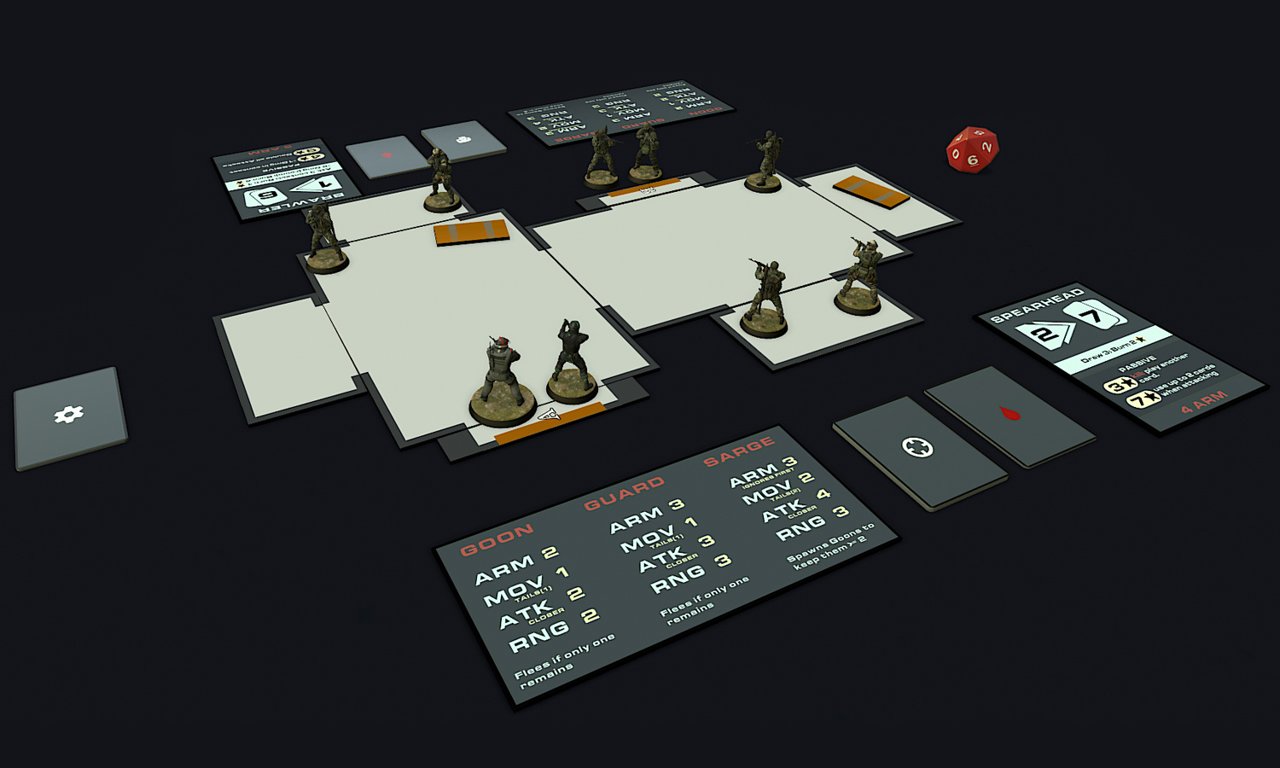
Started with a few long chats with Pawl Boracchi (I would really recommend his Patreon as well - plenty of cool ideas and indie gems!) as a standard dungeon crawler, this idea ...crawled into my mind for a while, and then kind of crystallized into a proper vision - one of those moments were you get to see a project becoming real in your mind eye, even tho most of it is still a complete blur.
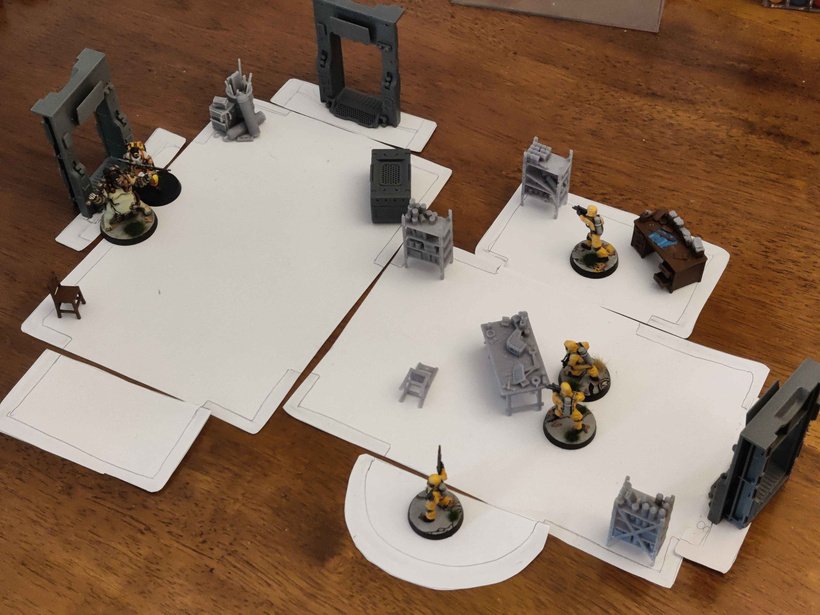
It became fairly clear while I was using some proxy scifi models to represent the fantasy ones. They just looked right, all the terrain felt getting in place, and I really realized that this could be a pretty great excuse to make some more cool 28mm.
Driving Points
I clearly wanted to make a crawler, but with a few hard (or hard-ish) constraints to give it a sense rather than being a Zombicide or Descent clone:
Semi-Coop: Enemies should follow simple rules, and each room is a puzzle to solve. Nothing unheard of, but with the healthy layer of competition between players given by some personal victory conditions that are not aligned among the group.
Modular Tiles: A set of components that shape the room you're clearing. The whole tiles set should be printable on two A4 sheets (or four A5), in a true print-and-play spirit. This also mean that the whole table could be resin-printed, since it's smaller than some buildings I've done!
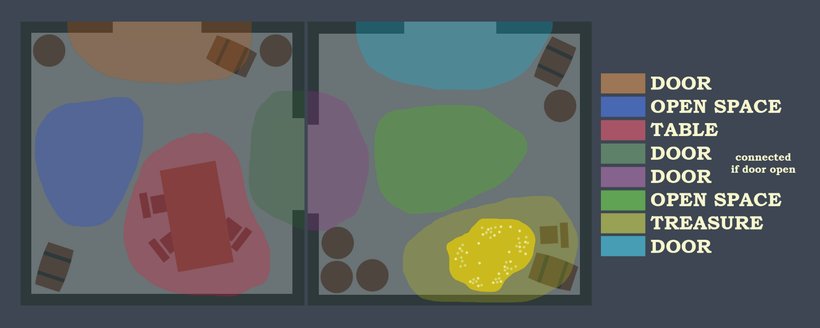
The initial idea. It did require more tiles, but the idea was areas that are well defined by the doors and the terrain in the room. In that regards, Pawl really made a great point in pointing out that building up whole dungeons on a table is kind of pointless - most of it remains empty, and it takes space and materials!
Limiting the amount of tiles and adding more "endings" to increase the variety of shapes, the result was even more compact: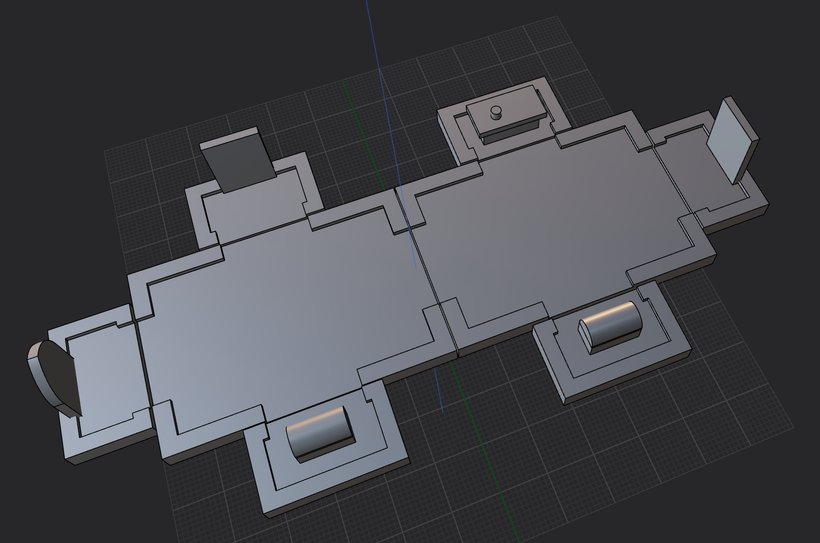
Sometimes It's just easier to 3D model something! No Ruler: The cool looks of the space should be priority. one-inch tiles are unnecessary in this kind of game. A simple (but well defined) system to recognize different areas in the room.
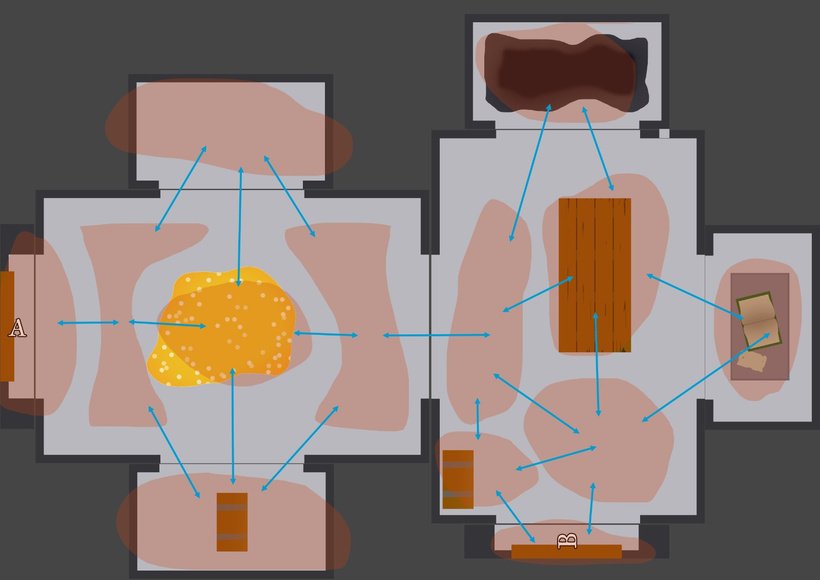
Ignore the fantasy theme - areas are well defined.And who doesn't like a pile of gold? What's more, adding objects in the room creates more regions - so the elements themselves are gonna have a use, all without a ruler.
No Dice: I do like random in games, but solo-coop games should be wary of too much randomness, which could basically take away agency from the player(s). My current combat system is something inspired by GKR by Weta Workshop, and by the more-than-famous Slay the Spire: deckbuilding, roguelike elements, and an exceedingly simple combat resolution (since the focus is simply not there).
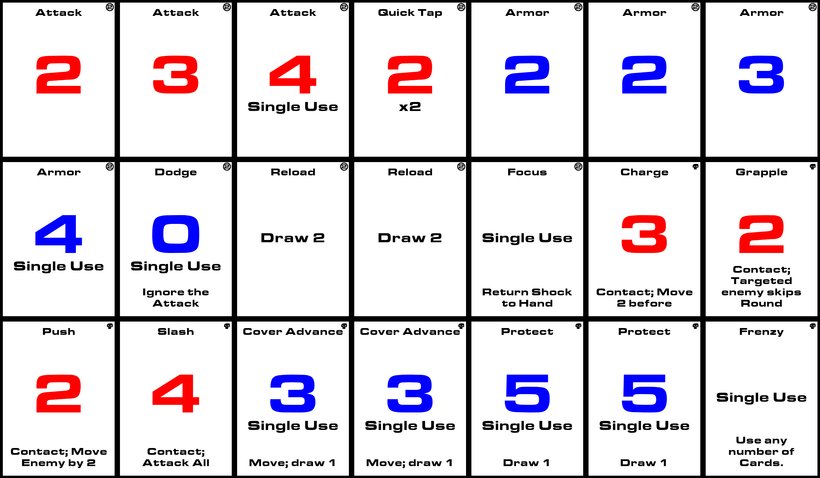
And example of a Character. 12 "common" cards + 9 Class cards. So: a vanilla core deck with a few cards to specialize each class, and a bunch of upgrades to be drawn as the game (and the campaign) progress!
General Direction
While the global direction of the game is still very vague, local testing is promising. I'm still far from a proper open testing phase, and I'm well aware that more often than not these games need marinading.
I still thought that sharing the progresses here would have been a pretty nice update, and a change from the usual 3D sculpting posts.
Jack