
Bastion gets a Physical Board
Also available on Patreon. Join the discussion and follow me there
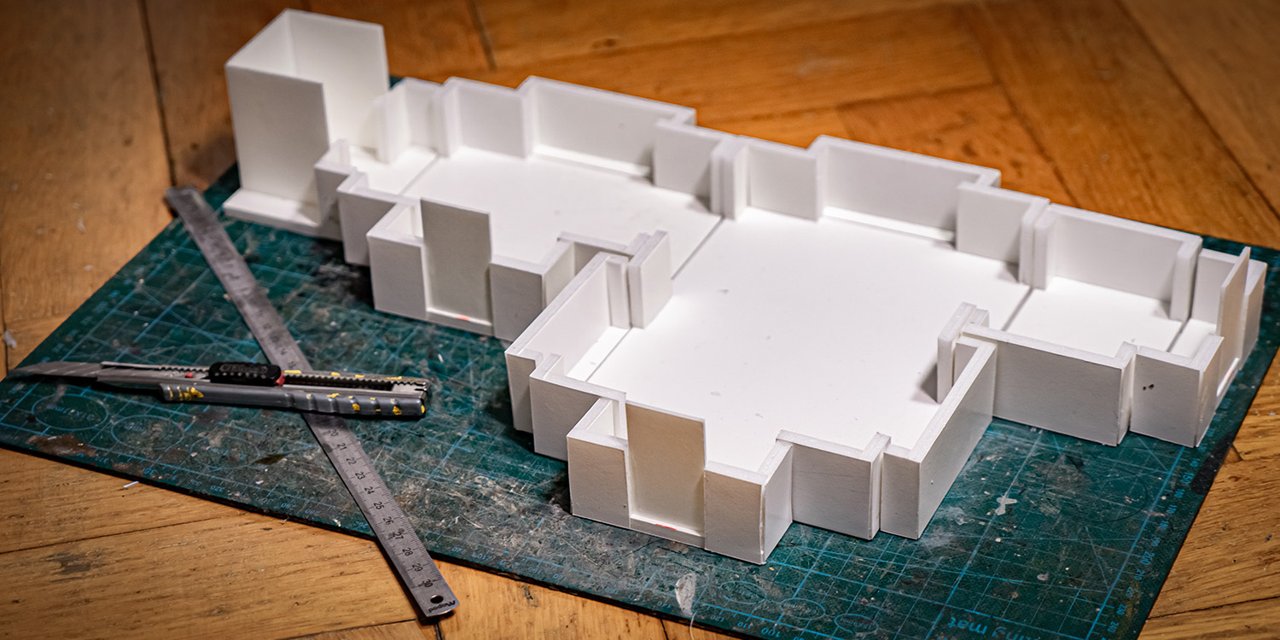
Developing and testing a game is an endless task. Quite literally, if you don't know when to draw a line, and when to set hard boundaries that move the process to the next phase.
It's a very abstract and arbitrary decision to make, of course, but I was realizing more and more that Bastion was getting a solid gameplay loop, while being built around constraints that weren't challenged enough.
Constraints
The main tenets that I wanted to keep were:
No ruler, no measuring stick, and (the trickiest) no physical line of sight. This is nothing entirely new, but I want it to work and integrate with a cool looking map, with 3D terrain on.
A whole table that people can print in resin. I would provide FDM options, and even 2D board options, but the high-quality resin board would be something unprecedented. Of course, this means that the whole gaming area cannot be really big: as much as I can thin out the printed parts, I wanted to keep the board weight within the 1 KG of resin mark.
Cards only. This constraint already fell, because it proved to be more trouble than benefit. Oh well.
Very Fast game loop: being campaign-oriented, I needed the "level" to last 10-15 minutes, to allow for a set of 5 to be played in a session (completing a "mission"), after which the characters upgrade and the campaign can proceed.
This is... clearly challenging.
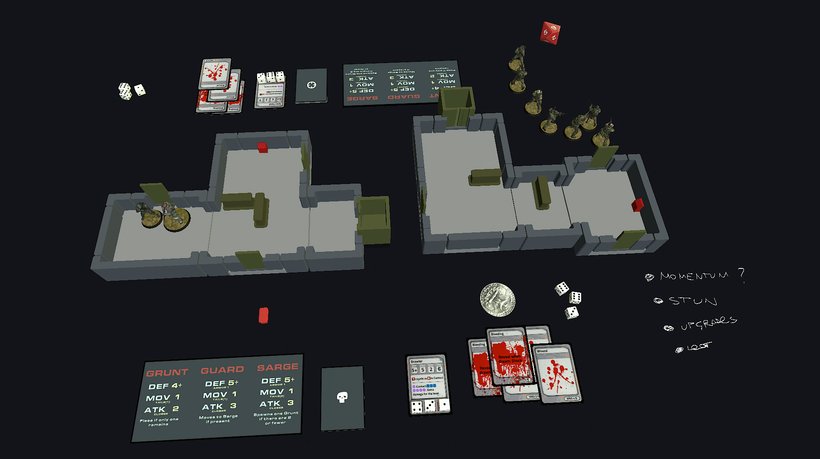
Ergonomics
It looks like this month's word within my circle of game designer friends is "ergonomics".
In truth, it should be every months'! Very few other things can make a game truly shine as the simple fact of having non-awkward actions that player can handle without pieces hitting each other, forgetting steps, or any kind of bothersome movement that simply takes a bit of fun out of the game. Even players that dismiss this most likely simply don't realize that those little things build up.
Do the models have enough spaces? Should I make the walls taller, or shorter? Can players clearly understand which area each model is in?
Note that ergonomics go far beyond these issues: I ended up removing the card-driven combat system for some unexpected trouble: revealing cards for each attack was not too bad, but reshuffling the deck frequently was really bothersome. There are so many different ways things can hit players the wrong way... and as much as blind playtesting can help in figuring out what is fine and what is bad, being able to guess yourself is really helpful.
Time to test
Once again, it's time to run some games and see what works and what doesnt. Only this time I'll be playing on a phisical board. With walls, and parts that can topple and fall. Let's stress the components before the sunken costs kick in!
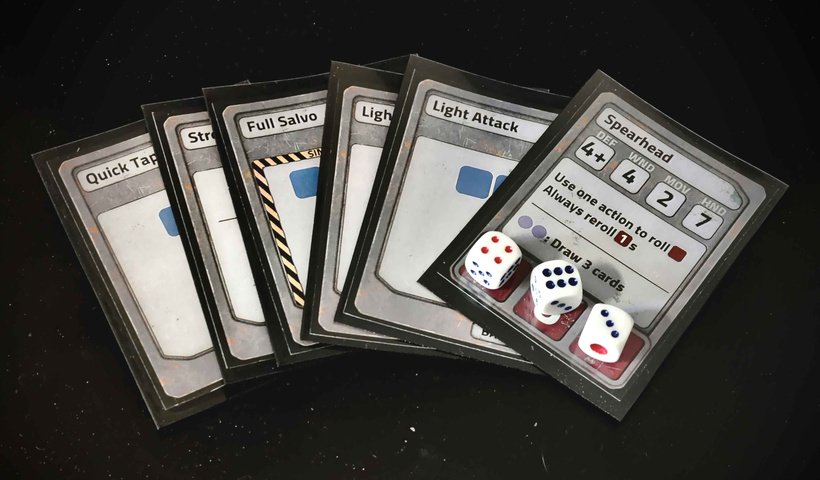
Will keep you all updated, this is a very exciting side-project!
Jack