
Modular Platforms
Also available on Patreon. Join the discussion and follow me there
First of all: I'm working quite a lot for the Third Wave campaign of Full Spectrum Dominance, and I'm putting hours and hours in preparing the book for the Modiphius print run, and even more in the Swarm Mode book and the upcoming Overdrive game. So yeah - My 6mm game and terrain are still my main thing, there's PLENTY of cool new stuff coming up, and my MMF store is my main source of income, there's no way I will stop caring for it.
Still, sometimes a bug hits (pun intended) and I really, really have to do something about it.
Walkways
Games like The Ascent have some amazing art direction, and even better technical artists that made the whole terrain self-build in a quasi-procedural way, allowing game designers to create levels with ease while keeping the environments vibes and details in line with the style.
I would recommend checking out this project, and a few others from their technical artist, because it's just sweet.
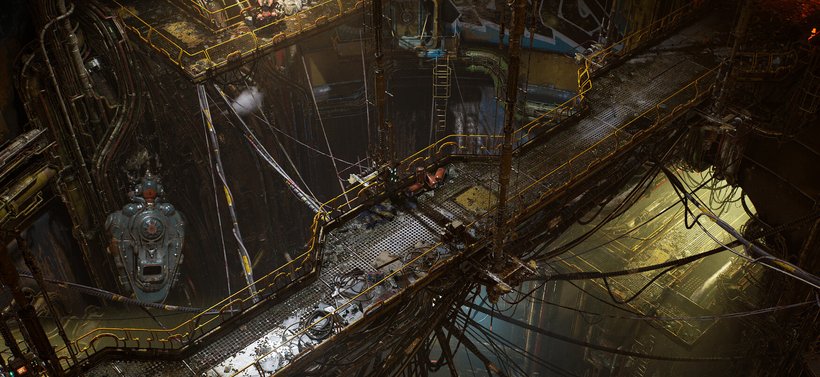
Granted it's nothing unique nor unheard of, but the craftmanship that went into these parts was truly inspiring, and made me want to try and do something similar.
Scale Choices
The first option (and one that I will probably pursue one day) was to make something like this for 6mm. Walkways broad enough to allow one infantry unit to go through, connecting elevated areas a bit like Starcraft does with its two-levels maps.
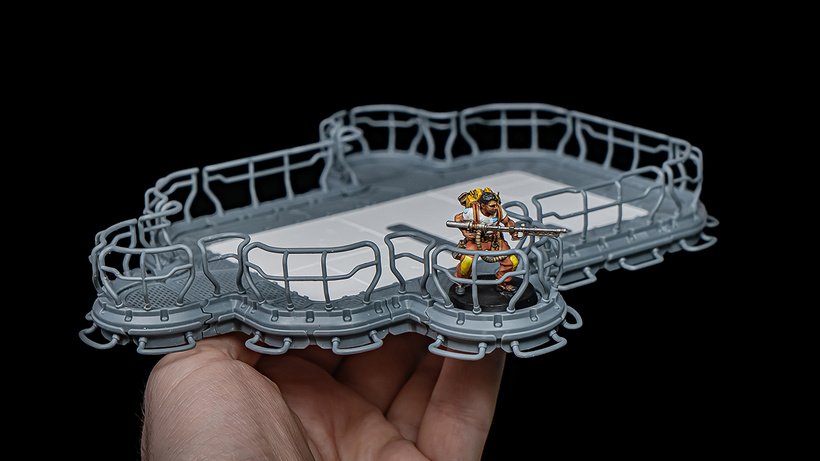
But since I just finished sculpting my first 28mm model, which perfectly matched the style... why not going 28 as well?
Modularity
The main tenet for the project was modularity, and ease of variation between components. Resin isn't that cheap, so I decided that the walkways, while being used for large areas as well, would only cover the outside parts of such areas, with the inside left to the players to fill - I used expanded PVC, but really anything works fine.
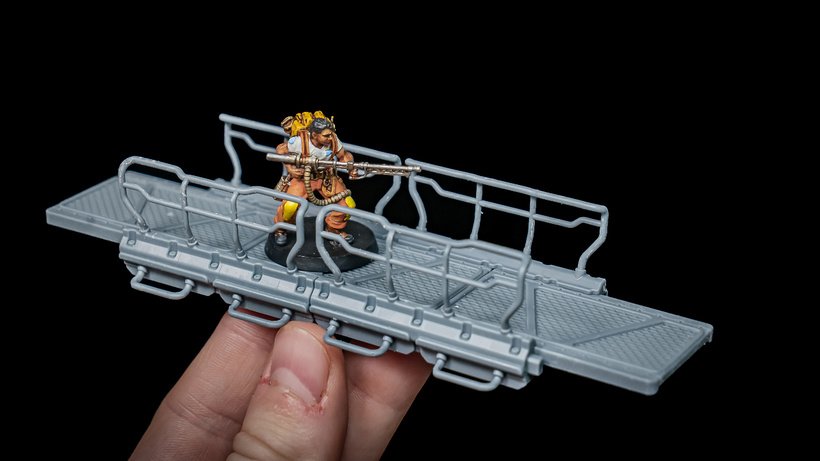
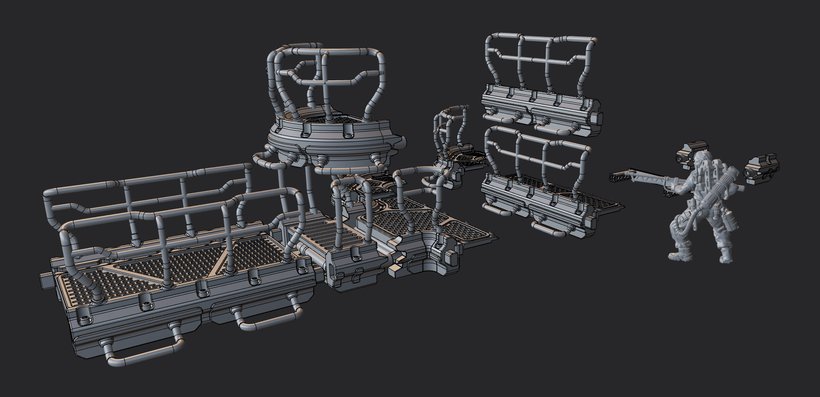
The first experiment was just a small walkway - it helped me defining the design language for the components. I did clearly get inspiration from the Ascent, but I really stopped there, and made my own shapes. Besides, most of the original concepts would snap in no time if printed.
The other main idea was to have "openings" in the walkways that could be magnetized and swapped between closed balconies and bridges. This means that once you've created your shapes you can still mix and match the platforms into a fully playable table. Two different kinds of sockets, one for gluing and one for magnet snap? sure.
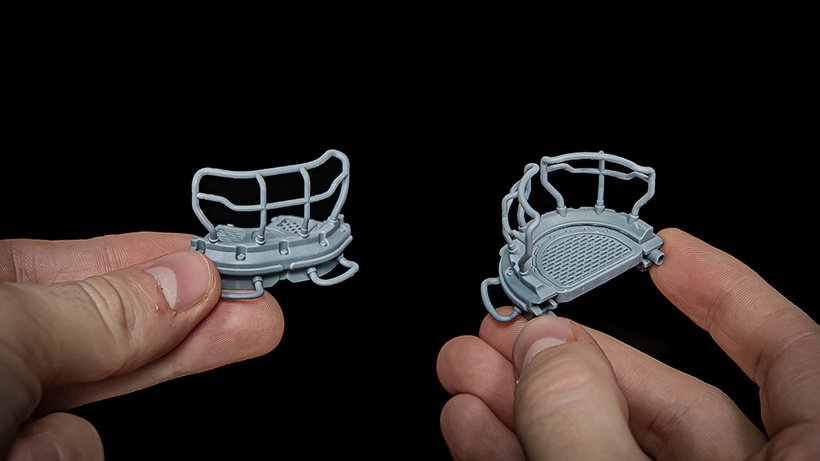
At that point things started trickling down, and I got to a whole first prototype.
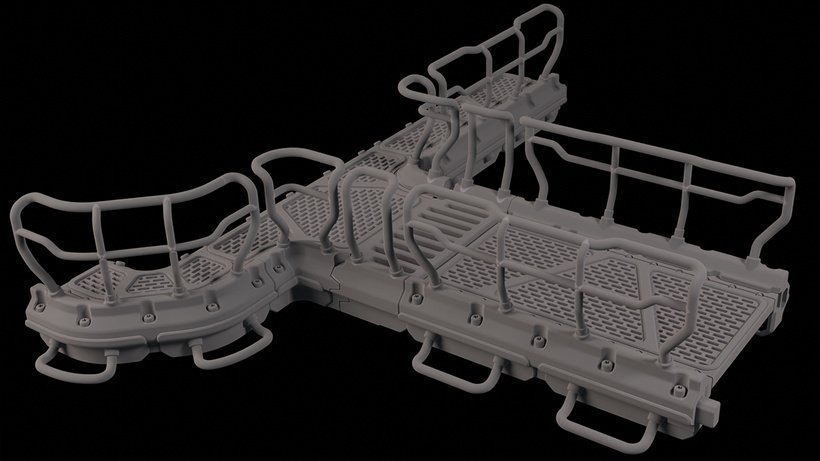
A few iterations and trials and errors later (tolerances and joints can be tricky!) I ended up with a ...handful of parts.
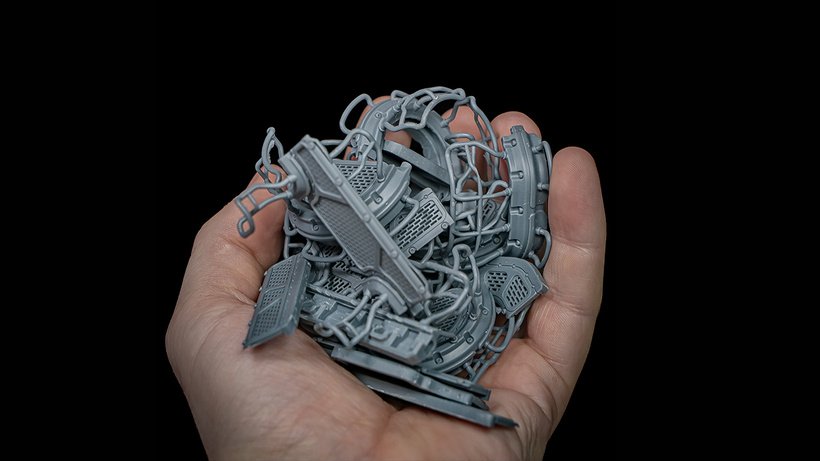
Assembly
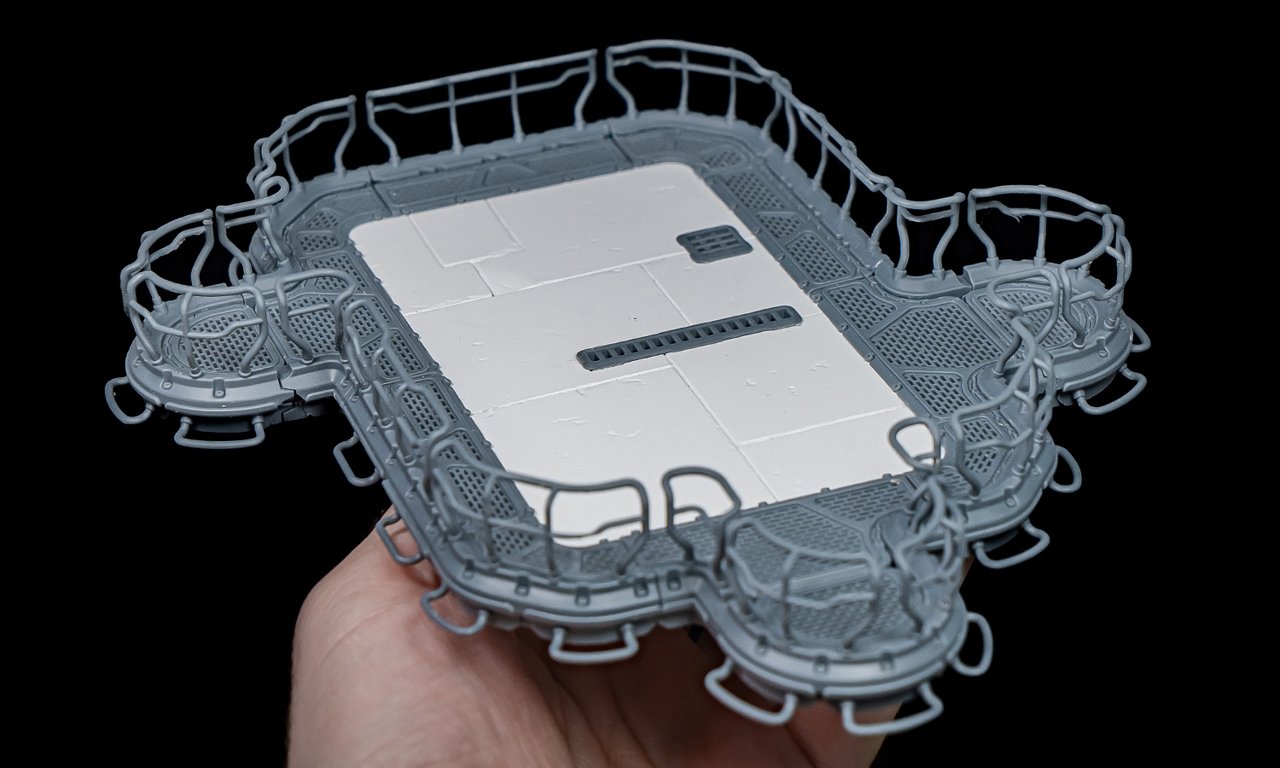
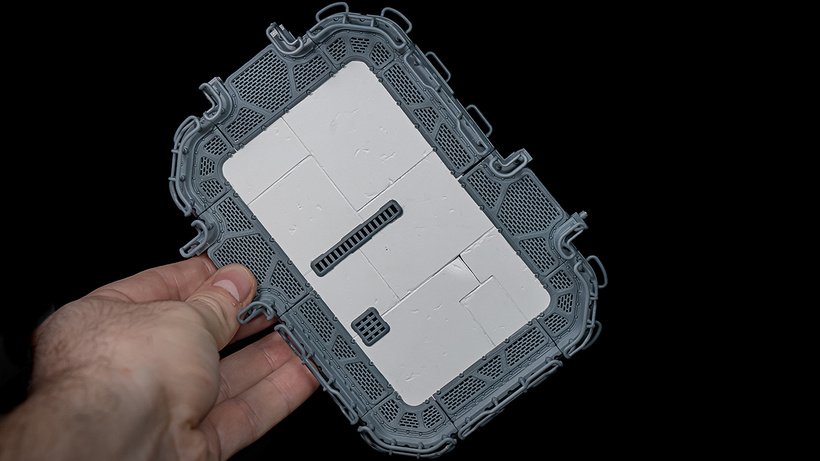
Thanks to the iterations and the hours spent to make every part join well, the final assembly went really smoothly (to a point. The central area is a FOREX panel (foamed PVC) with metal panelling scribed on it. I even 3D modelled a couple of grates to fit into holes in the panel, and I then started gluing everything around it.
Admittedly, it might be wiser to pre-paint the parts before assembly, but I wanted to have a finished piece to assess.
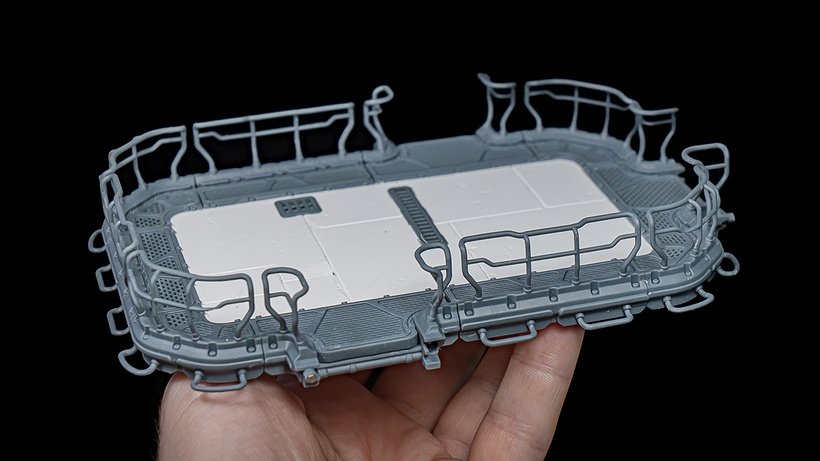
As mentioned above, the open endings of the platform have magnet sockets, and can ideally be all closed into protruding balconies.
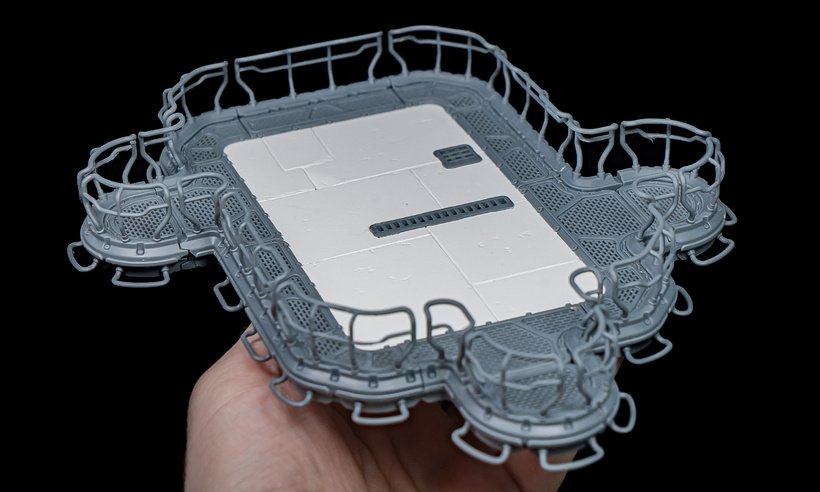
...or they can instead be joined with bridges! All modular, all easy to swap.
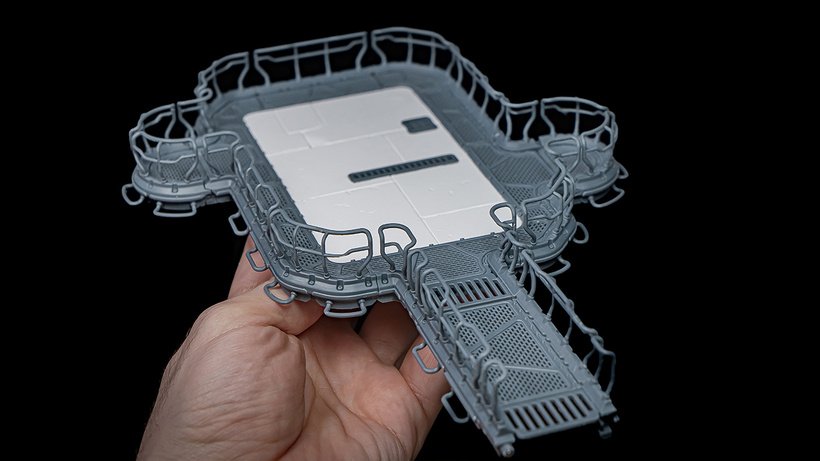
All internal shapes have a (2.5 + 5 * N+1) cm side length, where N is the amount of straight sections between two corners. The smallest platform would be have a central area of only 2.5x2.5 cm (why would you want that?), but you can go pretty much as wide as you please.
All Done!
And here we are, another project in the works with no roadmap or hard timeline, but nonetheless oh-so-fun.
This is gonna be a slow burner, but I see the potential and I can't wait to build a table around this (quite literally), really.
Stay tuned, keep playing in small scales,